
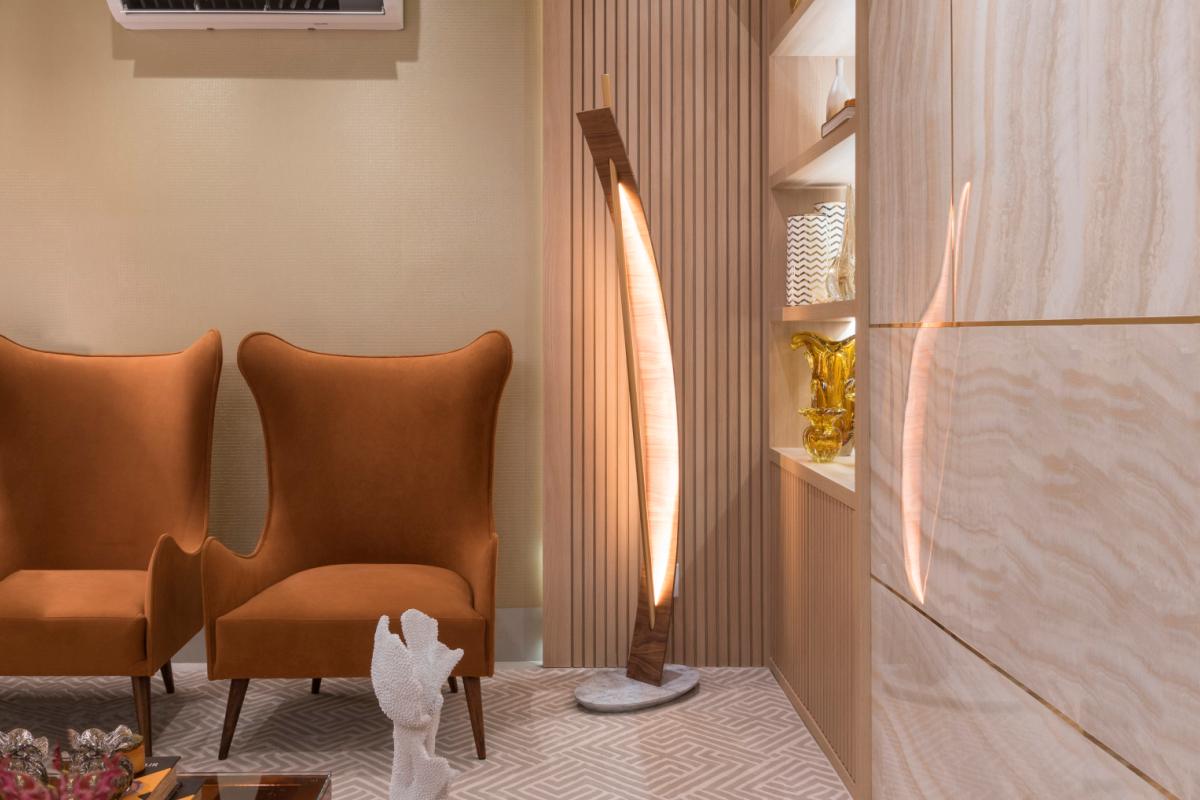
The use of a floor lamp is an example of an item that can transform a space, both for its functionality and for adding beauty and sophistication.
But does it match any decoration style? What are the necessary precautions to ensure harmony between the floor lamp and the other elements that make up a space?
The possibilities of interior design are endless: creativity, intention, materials, colors, and elements can be combined in various ways and meet different needs for each project.
That is what we will talk about here. Throughout the content, you will discover more details about the definition of a floor lamp and its functionalities, when they should be used, what the main types are, and you will check out valuable tips to choose the best option for your project.
Let's go?
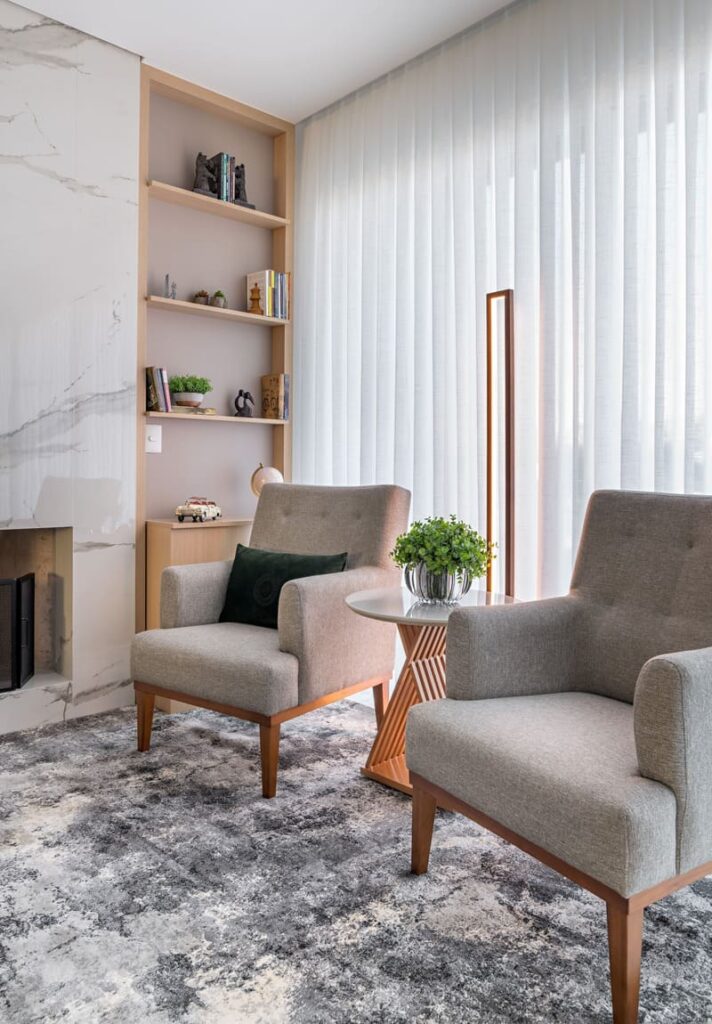
Floor lamps in interior design: concept and functionalities
Floor lamps, also called column lamps and floor luminaires, are secondary lighting items, positioned in strategic locations, which contribute to the feeling you want to generate in that environment — focus, concentration, coziness, tranquility, among others.
They are very interesting elements, because they present a good efficiency for direct or indirect lighting, depending on the model, and, at the same time, add great aesthetic value in various environments. Some even look like true sculptures.
There are many reasons why a floor lamp can be a good choice for your design project. Here are two of them:
- Creating another light source, when the ambient lighting is insufficient for the activities to be developed there;
- Overcoming challenges in cases where the ceiling's plaster structure must not be damaged with holes or other openings — as happens in rented apartments.
This is not to mention, of course, all the aesthetic value they add to environments, which are not necessarily related to their functionality, but rather to the personality and identity of the project.
It is also worth noting that column lamps help to give environments more versatility. After all, a large part of the spaces have multiple uses. The office, for example, can occasionally serve for reading, games, or even relaxation.
Therefore, by using an element that can be turned on or off according to the occupant's intention at the moment, you ensure that your projects will successfully adapt to different contexts.
When and how to use floor lamps?
As you might imagine, floor lamps are very versatile and meet different needs and desires. They can be used anywhere, from living rooms and bedrooms, to offices, entrance halls, and reading rooms.
So, currently, the question to be answered is not "when" to use floor lamps, but rather where to place them and which model to choose.
Some examples include reading floor lamps, which are adjustable and direct light to a specific location, perfect for reading or working and can be placed next to tables or armchairs.
In bedrooms, it is more common to see column lamps next to the bed, replacing the nightstand. But they can also be positioned next to benches and furniture used for resting or putting on shoes, for example.
Another possibility to consider is the use of these elements in more hidden corners of the rooms, as a way to give more function to the location and, of course, make better use of the space with a decorative element that matches well with the rest of the decoration.
We will talk more about the types of floor lamps below.
Types of floor lamps and their materials
As we emphasized, when it comes to floor lamps and interior design, the possibilities are endless.
There are several types of this luminaire, each with its own applications and uses. Here are some examples:
- For reading: they are adjustable and direct light to a specific location. They can be used with white or yellowish light, depending on the architect's or designer's intention, such as the models from the Balance and Dot lines, by Accord;
- Arc-shaped: they have a curved structure, which adds a layer of originality, being ideal for illuminating an entire room or a living space, as long as they already have a main light source, such as the Jangada model, by Accord;
- Tripod: this type has three support legs and offers more diffuse lighting. They are great as resources to create a warm and inviting environment, increasing sophistication. The models from the Clean line are an example of this type of column;
- Vertical: they are among the most common. They are tall and thin, emitting light from top to bottom, and can help add a soft lighting element to a dark corner, for example;
As for materials, floor lamps can be made of a variety of materials, depending on the style, the other decorative elements present in the space, and the desired functionality.
Accord's luminaires are created in wood, and some pieces have metal and fabric details.
Wood provides a natural and pleasant look for those interested in biophilic aesthetics. Currently, more and more wooden products bring a touch of sophistication to the environment they are intended for. Because it is a material that has distinct patterns, they add a trace of exclusivity to each piece.
Metal, on the other hand, which is durable, versatile, and contemporary, can be used to create a variety of styles.
Finally, fabric domes are used to soften the light, in addition to adding touches of color and, above all, texture to the item's design.
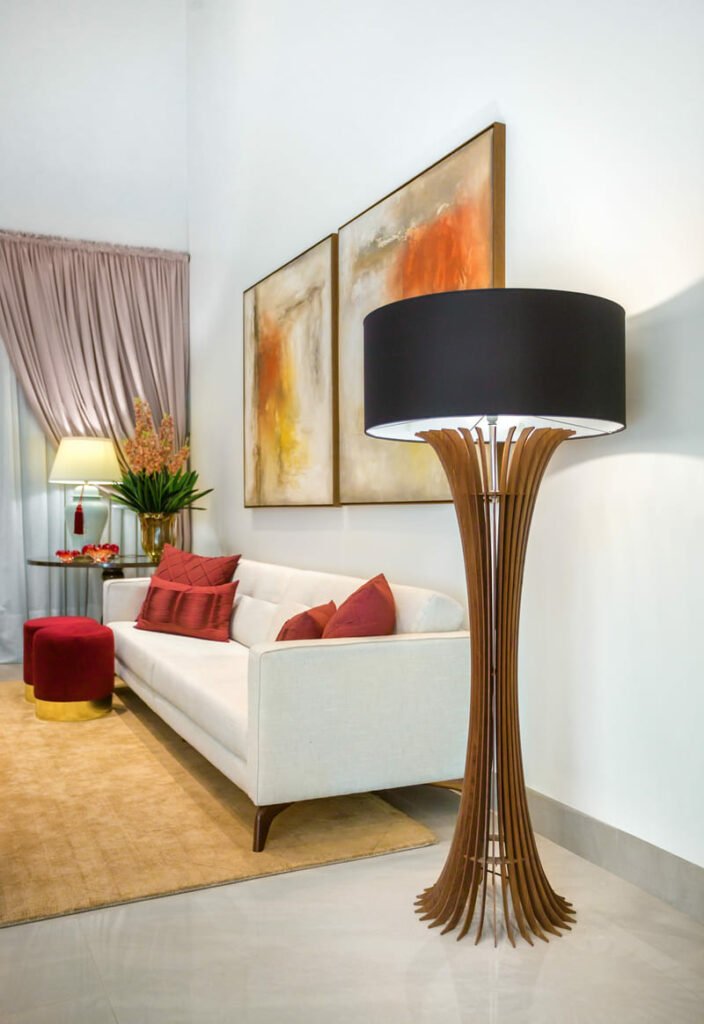
Tips for harmonizing the floor lamp with the decoration
Now that you know a large part of the concepts and elements that make up a floor lamp, we will give you some recommendations that will help keep the environment cohesive, attractive, and tasteful:
Color harmonization
Harmonization does not mean the absence of colors. Here, it is important to pay attention to intentionality. Therefore, choose luminaires that complement or contrast harmoniously with the colors present in the environment.
In practice, complementary colors can create uniformity, while contrasts add a nice touch of boldness. Everything depends on your goal!
Attention to proportions and sizes
Make sure the floor lamp has balanced proportions in relation to the rest of the space.
The logic is reasonably simple: in large environments, larger models can generate more visual impact and have more prominence in the decoration, while in smaller spaces more compact models can be better choices.
However, this is also influenced by the intention and expected functionality of the luminaire.
Functionality and complementation of other light sources
In addition to the aesthetic aspect, it is essential to take into account the functionality of the luminaire. If the piece will be used for a reading environment, for example, make sure the emitted light and the luminaire's dome are appropriate.
Still on this topic, do not forget to evaluate how the floor lamp integrates with the other light sources in the environment. This is important because too much lighting can also be uncomfortable.
How to choose the right floor lamp for each environment
Finally, it is useful to remember that selecting the best floor lamp for your project needs to take into account the environment in which it will be positioned. Despite being a movable element, it is expected to stay in one place most of the time.
See how the type of environment influences the choice:
1. Bedrooms: to keep the environment cozy, choose luminaires that offer intensity adjustment, that is, that allow softer lighting during the night;
2. Dining rooms: in this case, it is important to consider lighting as a functional and decorative element. Make sure the height of the luminaire is suitable for the table, avoiding, especially, glare in the vision of those present;
3. Offices: since the goal is to strengthen focus and productivity, prioritize luminaires that offer directed light to facilitate reading and activities that demand concentration in the work environment;
4. Commercial and corporate environments: here, it is important to think about the impact generated by the design. In commercial and corporate spaces, floor lamps can be used as decorative elements that adequately reflect the company's identity.
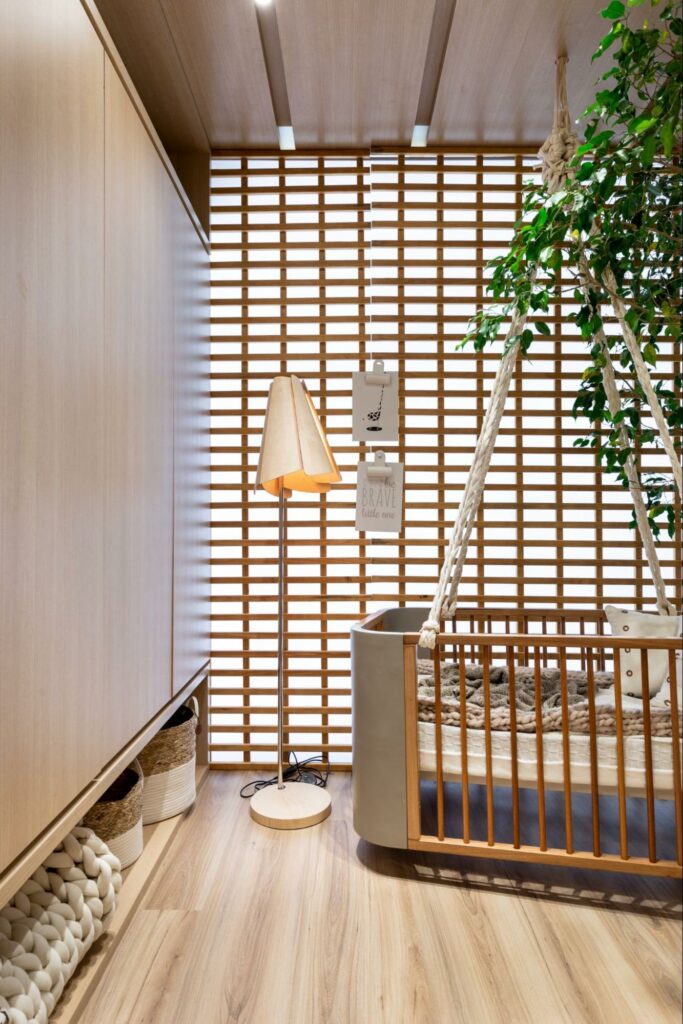
Find the ideal floor lamp for your project at Accord!
Always remember to consider aesthetics, functionality, and specific needs of each environment when choosing the ideal floor lamp.
The important thing is to ensure that the environment has, at the same time, adequate lighting for carrying out the necessary activities, and a striking visual identity. So, try combining different models to create unique and personalized lighting! Want to get ideas for floor lamps with exclusive design and recognized by the highest quality standard? Check out the floor lamps by Accord now!
Comments (0)
No comments yet. Be the first to share your thoughts!
Leave your comment
Your email will not be published. All comments are moderated before being posted.


