
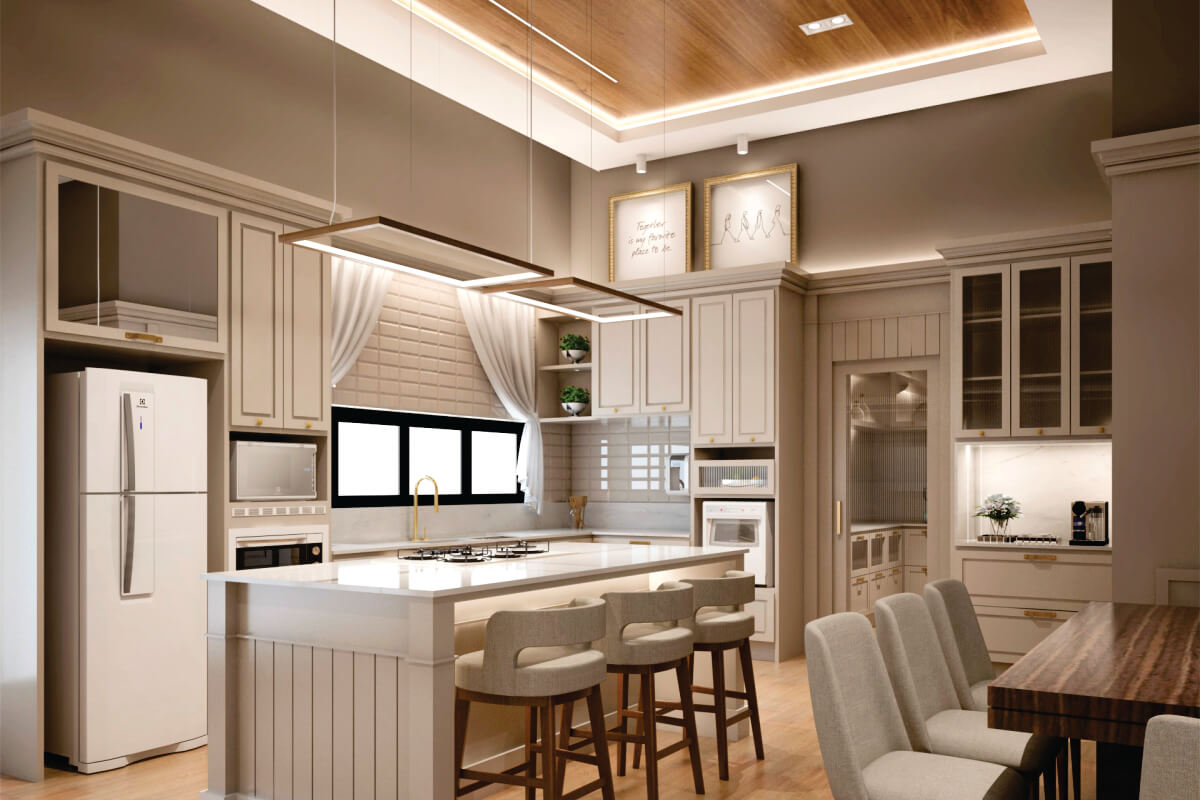
Understanding how the combination of decoration and lighting works in the American kitchen (open-concept kitchen) is one of the aspects that most impacts the transformation of this space.
When well executed, this association creates an environment that unites beauty and practicality, making it more pleasant for preparing meals and social interaction.
In this article, we will address the main points to consider when designing the interior of an American kitchen, such as the choice of colors, materials, and even the strategic positioning of light sources.
Shall we begin?
What is an American style kitchen like?
The American kitchen is a concept that eliminates the physical barriers between the food preparation area and the adjacent environments, such as the living room or dining room.
This configuration creates an open and integrated space, allowing the user, usually the cook, to interact with people in other areas of the house.
Without dividing walls, this style features a counter or central island that serves as a transition point between environments, and helps to delimit the space.
This multifunctional element can be used for food preparation, quick meals, or as a socialization area.
In recent years, the American kitchen layout has been widely incorporated into contemporary projects. This integration of spaces reflects a change in current lifestyle habits, where the meal preparation area is no longer just functional to become the heart of the home.
Its popularity is largely due to its ability to promote social interaction. While cooking, the host can chat with their guests or family, creating a more welcoming environment conducive to moments of conviviality.
Furthermore, the open configuration further increases the functionality of the space. The circulation of air and natural light is favored, and this makes the environment more pleasant.
The absence of partitions is also relevant in this context, as it generates the feeling of spaciousness, which is a great advantage in apartments or smaller homes.
Finally, this versatility makes the American kitchen an attractive option for different lifestyles, as the integration facilitates the flow of people and activities. Furthermore, it makes the house more dynamic and adaptable to the needs of its residents.
What is the difference between an American kitchen and an integrated kitchen?
Although the terms "American kitchen" and "integrated kitchen" are often used synonymously, there are some differences between these two concepts.
The American kitchen, originating in the United States, is characterized by the total absence of walls between the sink and stove area and the living and dining environments.
In this layout, the space is completely open, and the user has a wide view and total integration between the environments. Generally, a counter, a peninsula, or a central island serves as an element of transition and demarcation between the areas.
On the other hand, the integrated kitchen offers a slightly lower level of openness. In this case, there may be architectural elements that partially separate the kitchen from the other environments, such as half-walls, glass panels, sliding doors, or even pillars.
These elements form a visual delimitation without completely blocking the view or the flow between the spaces.
Regarding functionality, the American kitchen tends to prioritize socialization and interaction, transforming the act of cooking into a participatory activity.
The integrated kitchen, in turn, seeks a balance between the connectivity of the environments and the maintenance of a certain privacy in the culinary production area.
In terms of design, the American kitchen generally presents a more uniform style with the rest of the social area, using the same finishes and color palette.
The integrated kitchen, in turn, allows for aesthetic differentiation, and can have its own design that harmonizes with the other environments without necessarily following the same pattern.
Both styles share advantages such as the feeling of spaciousness, greater natural light, and flexibility in the use of space.
The choice between an American or integrated kitchen will depend on personal preferences, the residents' lifestyle, and the architectural characteristics of the property.
Lighting in the American kitchen
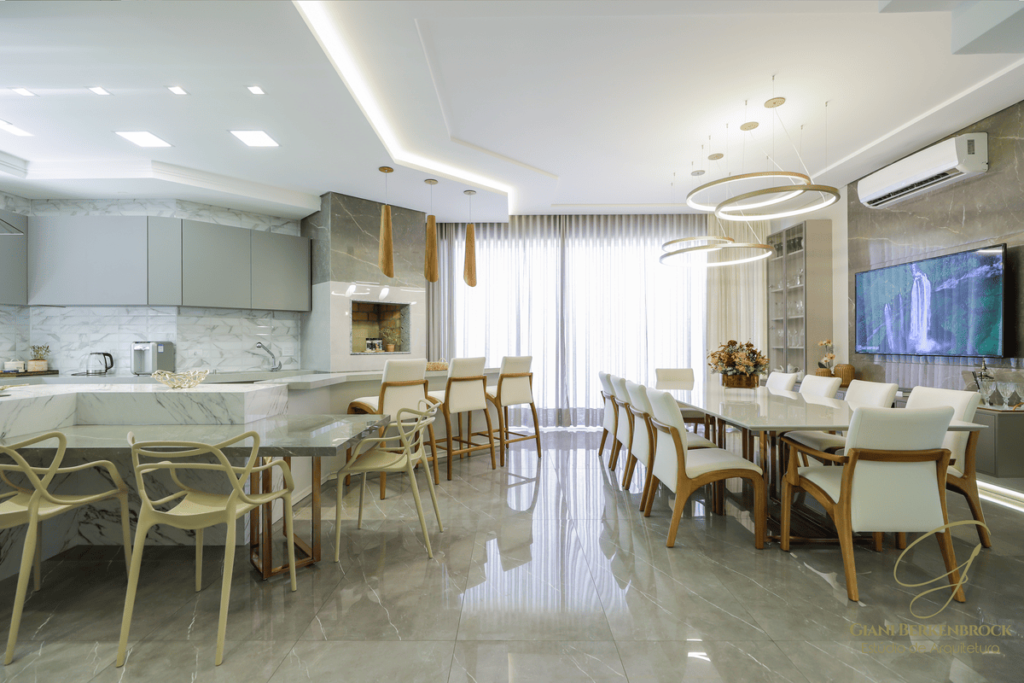
Proper lighting in an American kitchen goes beyond functionality. It directly influences visual comfort and the perception of space.
A well-crafted lighting project for a kitchen combines different types of light, such as general, decorative, and task light.
General lighting, coming from ceiling luminaires, provides the luminous base of the environment. This light helps eliminate shadows and provides uniform visibility throughout the area.
To complement, task lighting is directed towards specific work areas, such as countertops and the stove. This makes food preparation easier and ensures safety in activities with fire and sharp objects.
On the other hand, pendants over the island or dining table, besides providing localized light, also add a decorative element to the space. These pieces can become focal points and bring more of the residents' personal style to the environment.
An important aspect to consider is the color temperature of the bulbs. Warmer tones (2700K to 3500K) make the environment cozy, ideal for moments of conviviality.
On the other hand, colder tones (4500K to 6500K) or neutral (4000K), are more suitable for food preparation areas, as they increase contrast and sharpness, which makes the vision more attentive.
When planning the lighting of an American kitchen, it is also important to consider the integration with the other environments. The transition between spaces must maintain visual coherence that contributes to the feeling of spaciousness and fluidity characteristic of this type of layout.
Fundamental elements for the decoration of the American kitchen
When planning the decoration of an American kitchen, it is necessary to consider some elements that stand out for their ability to reflect the style of this environment.
Starting with the cabinets, the choice of models in light or white wood is quite common, as they convey a "cleaner" and organized aesthetic, which does not increase the visual weight of integrated environments.
To increase the feeling of lightness, upper cabinets can be replaced by open shelves, creating a more relaxed look, where it is possible to display decorative pieces or beautiful utensils.
Countertops are also important in the aesthetics of the American kitchen. Materials such as granites, quartz, or dolomitic marbles are popular due to their durability and sophisticated appearance.
Neutral tones like white, beige, or light gray harmonize well with various decoration styles. More bold patterns, with bright colors and apparent veins, can become the focal point of the environment.
The floor of the American kitchen deserves special attention, as it must be resistant and easy to clean, in addition to complementing the overall design. Options like porcelain tiles, ceramics, or wood are frequently used, and can be found in a variety of colors and textures.
A characteristic element of this kitchen style is the central island or the counter. These pieces can be equipped with high stools, to establish an informal place for quick meals or socialization.
And don't forget the appliances! They are also part of the kitchen's look. Appliances in stainless steel or with a matte finish can bring a contemporary look to the environment.
Meanwhile, the integration of built-in appliances, used in a tower, for example, helps maintain a uniform and elegant appearance.
As for finishes, metal details such as pulls, faucets, and luminaires can add a sophisticated touch. Copper, brushed brass, or satin nickel are options that bring personality to the space without compromising the clean aesthetics characteristic of this style.
Finally, the choice of a color palette should be made in accordance with the other spaces. Neutral tones such as white, beige, and gray are widely used, but the introduction of color points in accessories and appliances can bring liveliness to the environment.
Tips to harmonize decoration and lighting in the American kitchen
Harmonizing decoration and lighting in an American kitchen requires careful planning so that the environment is functional and pleasant. Check out, below, some tips to integrate these elements with balance.
Choose a cohesive color palette
Select a color palette that extends both to the decoration and to the lighting and integrated environments. To do this, give preference to neutral tones on larger surfaces and use colors in details or accessories.
Also consider the color temperature of the bulbs to complement the palette. Warm lights highlight earthy tones and woods, while colder ones enhance environments with a predominance of white and gray.
Invest in layered lighting
Combine different types of lighting to create depth and visual interest. A good way to do this is to use general light for the base, task lighting for work areas, and highlight light to enhance the decoration.
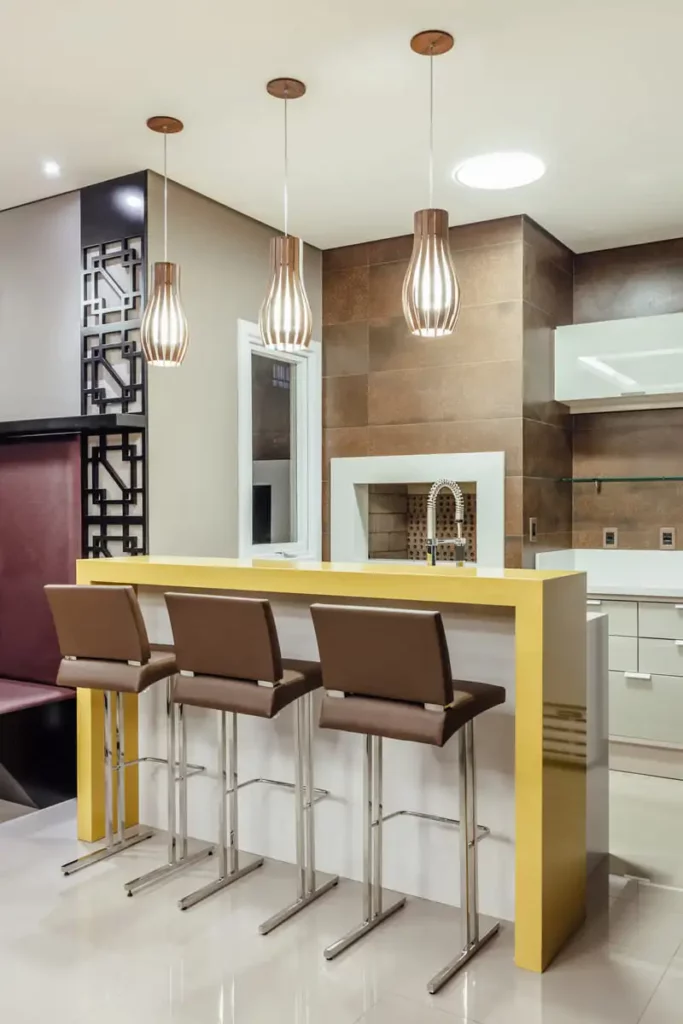
In this sense, pendants over the island or counter can serve as decorative pieces and focused light sources.
Harmonize the finishes
Align the finishes of the luminaires with the other metals in the kitchen, such as pulls, faucets, and appliances. This consistency establishes a cohesive and refined appearance.
Consider mixing textures to add visual interest. For example, combine brushed metal luminaires with glossy or matte surfaces to give more contrast.
Illuminate your American kitchen with Accord!
In this article, we addressed the main aspects of lighting in an American kitchen, such as the use of general, task, and decorative light, and the combination with appliances and other adornments. All this aiming at a balanced and practical environment.
To meet these needs, at Accord you will find a line of products that unites sophisticated design and technology. Our collection includes pendants, sconces, and plafons, carefully designed to complement and elevate the design of your kitchen.
Visit our website and discover how Accord luminaires can transform your kitchen into an even more special space!
Comments (0)
No comments yet. Be the first to share your thoughts!
Leave your comment
Your email will not be published. All comments are moderated before being posted.


